 admin
adminfree energy magnet motor a form of perpetual motion
A free energy magnet motor is often proposed as a solution for clean and inexhaustible power generation. It is based on the idea of using the natural forces of magnets—attraction and repulsion—to produce continuous motion. Many proponents argue that a free energy magnet motor could revolutionize energy production, offering a self-sustaining device that requires no external power source. However, the question arises: Is this concept a form of perpetual motion? To answer this, it’s crucial to understand the definition of perpetual motion and the scientific principles involved.
Perpetual motion refers to the idea of a machine that operates continuously without any energy input or external force. In theory, a perpetual motion machine would violate the laws of thermodynamics, particularly the first and second laws, which govern energy conservation and the tendency of energy to disperse into less useful forms, such as heat. The first law states that energy cannot be created or destroyed, only converted from one form to another. The second law dictates that systems tend to move toward a state of increased entropy, or disorder, and that energy transformations are never 100% efficient. As such, the notion of a free energy magnet motor being a form of perpetual motion raises significant doubts, as it would require a system that continually produces energy without any loss.
A free energy magnet motor operates by utilizing the magnetic forces between magnets. These magnets are often arranged in a specific configuration where their attractive and repulsive forces are harnessed to produce mechanical motion. This motion can, in theory, be used to power devices or even generate electricity. However, while the concept sounds promising, the problem lies in the fact that such a motor would eventually experience energy losses. These losses come from factors like friction, heat dissipation, and air resistance, all of which are inevitable in any mechanical system.
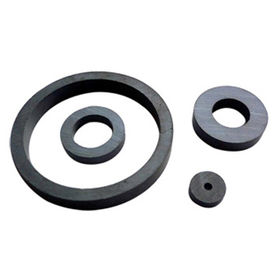
Is a free energy magnet motor a form of perpetual motion?
Furthermore, the creation of a free energy magnet motor that generates more energy than it consumes would defy the conservation of energy principle. To power itself without any input would mean that the motor would have to output more energy than what is available within the system, leading to a violation of fundamental physics. While magnets have the ability to create powerful forces, they cannot generate an infinite amount of energy, especially when factors like material degradation and energy leakage come into play.
In reality, the concept of a free energy magnet motor remains a theoretical idea that has not been practically realized. There have been many attempts to build such motors, but most have either failed or proven to be inefficient. Some designs have shown temporary or limited motion, but none have managed to provide a self-sustaining system that could replace conventional power sources. Despite these challenges, innovation in this field continues to attract interest, with inventors and researchers experimenting with new technologies to improve the efficiency of magnetic systems.
For those interested in exploring the potential of free energy magnet motors, platforms like Global Sources provide a convenient way to shop online for wholesale products related to these technologies. Verified suppliers and manufacturers from countries like China, India, and Korea offer a range of products, from prototypes to magnet-based components that may be used in free energy magnet motor designs. By using a B2B platform, buyers can compare prices, understand minimum order quantities (MOQs), and directly reach out to suppliers to discuss potential deals.
While free energy magnet motors remain an intriguing concept, they currently do not qualify as perpetual motion machines. The challenges posed by the laws of thermodynamics and energy loss mechanisms mean that the dream of a self-sustaining motor is, for now, just that—a dream. Nevertheless, research and development in magnetic technology and energy systems continue to evolve, and new solutions may emerge to address some of the obstacles that have prevented the realization of free energy magnet motors.
