 admin
adminAluminium has become one of the most widely used materials across modern industries because of its lightweight structure, durability, corrosion resistance, recyclability, and excellent design flexibility. From construction and automotive applications to solar energy, electrical equipment, furniture, and industrial machinery, aluminium profiles are used in products and structures of various sizes. The growing demand for these versatile components has increased the importance of an Aluminium Profile manufacturer in India capable of delivering reliable, customized, and precision-engineered solutions.
Aluminium profiles are generally produced through the extrusion process, where heated aluminium billets are pushed through specially designed dies to create specific shapes and dimensions. This manufacturing method enables companies to develop profiles that meet particular structural, functional, and aesthetic requirements.
Growing Demand for Aluminium Profiles in India
India’s rapid industrialization, urban development, infrastructure expansion, and renewable energy growth are creating new opportunities for aluminium profile manufacturers. Construction projects require aluminium profiles for doors, windows, curtain walls, partitions, facades, railings, and architectural structures.
At the same time, industrial manufacturers increasingly use aluminium sections for machinery frames, enclosures, equipment structures, conveyors, and production systems. The automotive and transportation sectors also benefit from aluminium’s lightweight characteristics, which can help reduce overall component weight.
The increasing installation of solar energy systems is another major factor contributing to aluminium profile demand. Solar mounting structures and support systems require materials that are durable, lightweight, and capable of performing in outdoor environments.
What Makes Aluminium Profiles Valuable?
One of the biggest advantages of aluminium profiles is their strength-to-weight ratio. Aluminium is considerably lighter than many conventional metals while still providing excellent structural performance for numerous applications. This makes aluminium profiles easier to handle, transport, and install.
Aluminium also offers natural corrosion resistance. When exposed to air, it develops a thin oxide layer that protects the underlying metal. Additional surface treatments such as anodizing or powder coating can further improve appearance, durability, and resistance to environmental conditions.
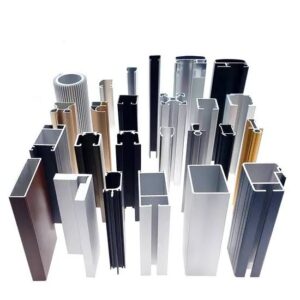
Another important advantage is design flexibility. Through customized extrusion dies, manufacturers can produce profiles with complex cross-sectional shapes. This allows engineers and designers to develop components that precisely match their application requirements.
Role of an Aluminium Profile Manufacturer
A professional Aluminium Profile manufacturer in India does more than simply produce standard aluminium sections. Manufacturers often work with customers to understand technical requirements, product dimensions, alloy specifications, surface finishes, and intended applications.
The production process can include billet selection, heating, extrusion, cooling, stretching, cutting, ageing, surface treatment, inspection, and packaging. Each stage requires appropriate equipment and quality-control procedures to ensure consistent results.
Manufacturers with modern extrusion machinery and experienced technical teams can produce both standard and customized profiles. They may also provide additional services such as anodizing, powder coating, polishing, machining, drilling, cutting, and fabrication.
Applications Across Multiple Industries
Aluminium profiles are used in numerous industries because of their versatility. In architecture and construction, they are commonly used for window and door frames, partitions, facades, curtain walls, and structural systems.
In industrial manufacturing, aluminium profiles can be used for machine frames, workstations, safety guards, conveyor systems, and equipment enclosures. Their modular nature makes them particularly useful for applications requiring flexibility and easy assembly.
The electrical and electronics sectors use aluminium profiles for housings, heat sinks, cabinets, and other components. Aluminium’s thermal conductivity can make it suitable for applications where heat management is important.
Furniture manufacturers also use aluminium sections for frames, modular furniture, office systems, and decorative elements. Meanwhile, solar energy companies rely on aluminium profiles for mounting and support structures.
Importance of Quality and Customization
When selecting an Aluminium Profile manufacturer in India, businesses should consider product quality, manufacturing capabilities, customization options, production capacity, finishing facilities, and delivery reliability.
Dimensional accuracy is particularly important when aluminium profiles are used in systems that require precise assembly. Consistent wall thickness, surface quality, straightness, and profile dimensions can contribute to better product performance.
Customization is equally valuable. Different industries have different requirements, and a manufacturer capable of designing and producing specialized profiles can provide more effective solutions than a supplier limited to standard sizes.
Sustainability and Aluminium Manufacturing
Sustainability has become an important consideration for modern manufacturers. Aluminium is highly recyclable, and recycled aluminium can be used to produce new products while retaining important material properties. This makes aluminium an attractive option for businesses looking to reduce material waste and improve resource efficiency.
Manufacturers are also adopting more efficient production technologies, improved process controls, and responsible manufacturing practices to reduce energy consumption and optimize material usage.
Choosing the Right Manufacturer in India
Businesses should evaluate an aluminium profile manufacturer based on technical expertise, extrusion capacity, alloy options, tooling capabilities, surface finishing facilities, quality assurance, customization support, packaging, and logistics.
A dependable manufacturer should be able to maintain consistent quality across large production volumes while meeting agreed specifications and delivery schedules. Strong technical support and responsive customer service can also make the procurement process more efficient.
Conclusion
The growing demand for lightweight, durable, customizable, and recyclable materials has made aluminium profiles an essential component of modern manufacturing. An experienced Aluminium Profile manufacturer in India can support diverse industries by providing precision-engineered profiles designed for specific applications.
With India’s expanding construction, automotive, renewable energy, electrical, furniture, and industrial sectors, the market for aluminium profiles is expected to continue developing. By combining advanced extrusion technology, quality control, customization capabilities, and efficient production practices, Indian aluminium profile manufacturers can provide dependable solutions for both domestic and global markets.
