 admin
cost-effective is a steel warehouse building
A steel warehouse building has become one of the most popular choices for modern storage and industrial facilities because of its ability to balance quality with affordability. When businesses consider investing in a warehouse, cost-effectiveness is often the primary concern, and steel buildings consistently deliver strong value across construction, maintenance, and long-term operational efficiency. The concept of cost-effectiveness does not only refer to the initial investment but also to the durability, performance, and savings a building provides throughout its lifetime. For this reason, more companies are choosing steel over traditional materials such as wood or concrete for their warehouses.
One of the main reasons a steel warehouse building is highly cost-effective is the speed of construction. Unlike traditional buildings that require lengthy site preparation, labor-intensive work, and time-consuming material handling, steel structures are usually pre-engineered and manufactured in factories before being assembled on-site. This pre-fabrication process minimizes delays, reduces labor requirements, and ensures greater precision in construction. Faster completion times mean businesses can begin operations sooner, which directly translates into financial savings. For companies operating in competitive markets where efficiency is crucial, this rapid construction becomes a major advantage.
Another significant factor contributing to the cost-effectiveness of a steel warehouse building is its durability. Steel is inherently strong and resistant to many of the issues that plague conventional construction materials. For example, wooden warehouses are vulnerable to termites, pests, and decay, while concrete structures may develop cracks or require frequent maintenance. Steel, on the other hand, resists corrosion, fire, mold, and extreme weather conditions when properly coated and maintained. This long-term resilience drastically reduces repair and replacement costs, ensuring that the initial investment continues to provide value for decades.
Maintenance costs are also much lower for a steel warehouse building compared to other options. Regular upkeep such as painting, treating against pests, or structural repairs is minimal because steel requires very little to stay in excellent condition. Protective coatings such as galvanization or powder finishes prevent rust, while advanced insulation and roofing systems safeguard the building against environmental wear and tear. For businesses that want to reduce ongoing expenses and maximize their profits, the low maintenance requirements of steel buildings are a compelling reason to choose this type of structure.
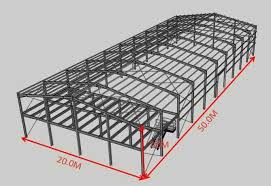
How cost-effective is a steel warehouse building?
Energy efficiency further adds to the cost-effectiveness of a steel warehouse building. Many modern steel warehouses are designed with insulation panels, reflective roofing, and natural ventilation systems that help regulate internal temperatures. These features reduce the reliance on artificial heating and cooling systems, lowering energy bills significantly over the long term. Additionally, steel warehouses can easily integrate solar panels and other renewable energy systems, providing further savings while promoting sustainability. As energy costs continue to rise, the efficiency of steel structures becomes an even more valuable asset for businesses.
Flexibility in design is another aspect that makes a steel warehouse building a smart financial choice. Unlike traditional materials that often require major reconstruction for expansion or modifications, steel buildings are modular in nature and can be easily adapted to meet evolving business needs. If a company requires additional storage space in the future, extensions can be added without tearing down existing structures. This adaptability eliminates the need for entirely new buildings and ensures that the initial investment remains relevant even as operations grow or change.
The space efficiency of a steel warehouse building also plays a role in its cost-effectiveness. Steel structures can be designed with wide, clear spans that do not require internal columns or supports. This creates large open spaces that can be fully utilized for storage, machinery, or logistics operations. By maximizing usable square footage, businesses can make the most of their investment without paying for wasted space. The ability to design according to specific needs ensures that every part of the warehouse contributes to operational efficiency and profitability.
Another financial advantage lies in the scalability of a steel warehouse building. Businesses often face unpredictable market conditions and demand fluctuations, and the ability to quickly expand or reconfigure a facility provides financial security. The modular design of steel structures means that companies can invest only in the space they currently need, with the option to expand cost-effectively as demand grows. This flexibility helps avoid unnecessary upfront expenses while still planning for long-term growth.
The initial construction costs of a steel warehouse building are often lower than those of conventional structures due to the efficiency of the manufacturing and assembly process. With reduced labor, less waste, and faster completion, the overall project cost can be kept under control. Many suppliers also provide turnkey solutions that include design, fabrication, transportation, and assembly, which further simplifies the process and reduces the need for multiple contractors. For businesses that want predictable budgets and controlled expenses, steel warehouses provide a more affordable and straightforward option.
Sustainability is also a factor that adds to the cost-effectiveness of a steel warehouse building. Steel is 100% recyclable, which means that even at the end of its lifespan, the materials retain value and can be reused. This reduces environmental impact while also providing potential financial returns. Companies that focus on sustainability also benefit from reduced environmental compliance costs and improved brand reputation, which can indirectly contribute to profitability.
In conclusion, a steel warehouse building is highly cost-effective because it combines affordability with long-term value. From faster construction and reduced maintenance to energy efficiency, scalability, and space optimization, these buildings provide a comprehensive solution for businesses looking to maximize their investment. Their durability and adaptability ensure that they remain functional and relevant for decades, offering savings not just in the short term but throughout their entire lifespan. For industries seeking a balance of reliability, performance, and financial efficiency, a steel warehouse building remains one of the best choices available.
